
Building an Emergency Fund the Islamic Way
You’re reading this because life’s uncertainties keep you up at night. You want to build financial security for your family, but you’re unsure how to do it in a way that aligns with Islamic principles. You’ve heard about emergency funds, but questions swirl: Is keeping money idle permissible? Where should I store it? How much is enough?
Let’s build your Islamic emergency fund in 4 clear steps.
In this guide, we’ll cover:

- What is an emergency fund from an Islamic perspective?
- Why is having an emergency fund important in Islam?
- Three foundational principles for building your fund
- Halal options for storing your emergency savings
What is an Emergency Fund from an Islamic Perspective?
An emergency fund is money set aside specifically for unexpected life events – medical emergencies, job loss, urgent home repairs, or family crises. It’s your financial safety net that prevents you from falling into debt or making desperate decisions during hardship.
From an Islamic viewpoint, building an emergency fund aligns with the principle of planning and preparation. The Quran tells the story of Prophet Yusuf (peace be upon him), who advised Egypt to store grain during seven years of abundance to prepare for seven years of famine [Quran 12:47-49]. This teaches us that planning for difficult times is not only permitted but encouraged.
Key Islamic principles that support emergency fund building:
- Avoiding debt and interest (riba) – An emergency fund prevents you from needing interest-based loans
- Self-reliance before seeking help – Taking care of your own needs first before burdening others
- Protecting your family – Fulfilling your responsibility as a provider
- Trust in Allah with action – Tawakkul means trusting Allah while taking practical steps
Why is Building an Emergency Fund Important in Islam?
Before we dive into the “how,” let’s understand the “why.” This motivation will keep you consistent when building your fund feels challenging.
Religious Foundation
The Prophet Muhammad ﷺ said: “The upper hand is better than the lower hand. The upper hand is the one that gives, and the lower hand is the one that receives.” [Bukhari & Muslim]
Having an emergency fund means you remain in the position of giving (or at least self-sufficiency) rather than constantly needing to receive help from others.
Allah says in the Quran: “And let those who find not the financial means for marriage keep themselves chaste, until Allah enriches them of His Bounty.” [24:33]
This verse emphasizes waiting and preparing until you have the means – a principle that applies to financial preparedness in general.
Practical Reality
Consider these scenarios:
- Amira, a teacher in London, lost her job unexpectedly during company restructuring. Without an emergency fund, she had to borrow from family members, creating emotional strain and feelings of guilt.
- Tariq, a small business owner in Manchester, faced a sudden medical emergency requiring £3,000. Without savings, he considered taking out an interest-based loan, compromising his values during a moment of desperation.
- Fatima, a single mother in Birmingham, had her car break down – her only means of getting to work. With no emergency fund, she missed work for a week, risking her job, until her brother could help financially.
These real situations show us: An emergency fund isn’t just about money – it’s about protecting your faith, dignity, and peace of mind.
Three Foundational Principles for Building Your Emergency Fund
Before we discuss where to keep your money, let’s establish the framework that will guide all your decisions. These three principles, rooted in both Islamic wisdom and financial practicality, will shape your entire approach.
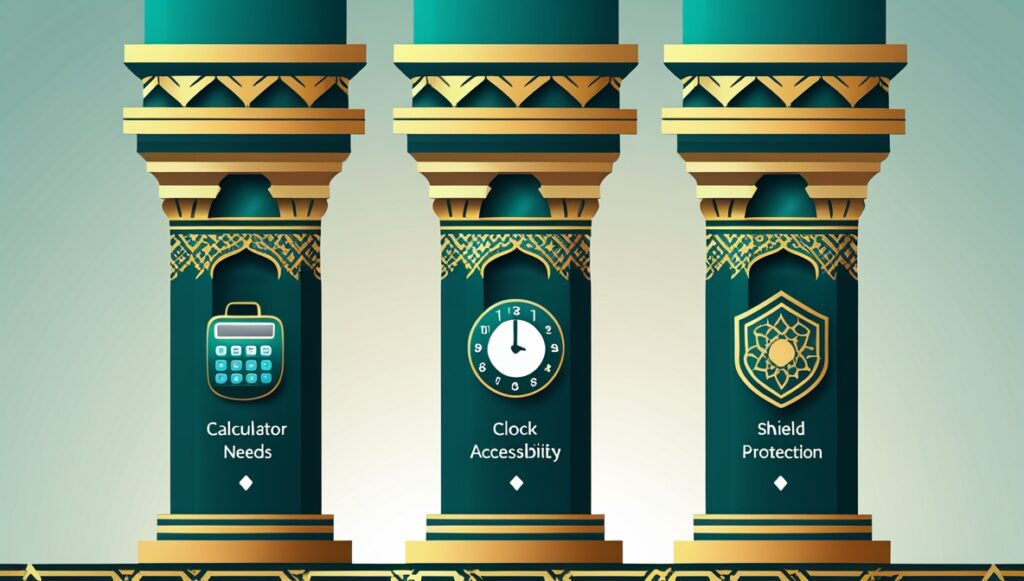
1. Know Your Baseline – Calculate Your True Needs
The first question you must answer: How much do I actually need?
Islamic teaching emphasizes moderation and avoiding both extravagance and miserliness. Your emergency fund should reflect your genuine needs, not inflated wants.
The calculation process:
- List your essential monthly expenses: rent/mortgage, utilities, groceries, transportation, insurance, minimum debt payments
- Multiply by 3 to 6 months (3 months for stable employment, 6+ months for less stable situations)
- Add a buffer for truly unexpected costs (typically £500-£1,500)
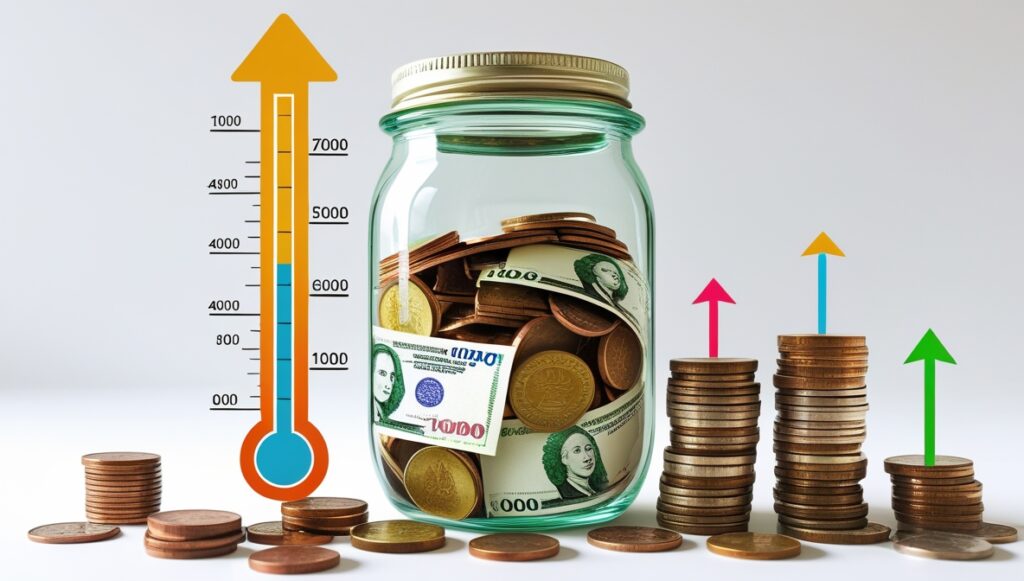
For example, if your essential monthly expenses are £2,000:
- Minimum fund: £6,000 (3 months)
- Ideal fund: £12,000 (6 months)
- With buffer: £13,500
Important Islamic consideration: Don’t let perfection paralyze you. Start with £1,000 as your first milestone, then build from there. The Prophet ﷺ said: “The deeds most loved by Allah are those done regularly, even if they are small.” [Bukhari & Muslim]
2. Prioritize Accessibility and Liquidity
This principle answers: How quickly can I access my money when disaster strikes?
Unlike long-term investments, your emergency fund has one primary job: be there when you need it, immediately.
The Islamic principle of avoiding harm (darar) applies here. If your money is locked away in investments you can’t access quickly, you might be forced into harmful situations – taking riba-based loans, selling assets at a loss, or burdening others unnecessarily.
The Accessibility Rule: Your emergency fund should be accessible within 24-48 hours maximum. This means:
✅ Good for emergency funds:
- Instant-access savings accounts
- Easy-access Islamic savings accounts
- Cash (small amounts at home for immediate needs)
❌ Not suitable for emergency funds:
- Stocks and shares (volatile, takes days to sell)
- Property investments (extremely illiquid)
- Fixed-term deposits you can’t break
- Investments locked in for specific periods
Think of it this way: Prophet Yusuf’s stored grain was ready to distribute when famine struck – not locked away inaccessibly. Your emergency fund should operate on the same principle.
3. Protect Your Fund from Both Sharia and Financial Risks
This principle addresses: How do I keep my money safe in both dunya and akhirah?
Your emergency fund must satisfy two protection criteria:
A) Sharia Compliance Protection
- Avoid accounts that explicitly pay interest (riba)
- Don’t store emergency funds in stocks of haram companies
- Be cautious of conventional banks’ default interest features
The Prophet ﷺ said: “Leave what makes you doubt for what does not make you doubt.” [Tirmidhi]
If an account or option creates doubt in your heart, choose the clear halal alternative, even if it offers slightly less convenience.
B) Financial Security Protection
- Your money should not lose value rapidly
- Account should be protected (FSCS protection in the UK up to £85,000)
- Low or no fees that eat away at your savings
- Stable storage (not subject to wild fluctuations)
The Balance: Yes, inflation will gradually reduce your money’s purchasing power. But this is an accepted lesser harm compared to the greater harm of having no emergency fund at all or storing it in haram ways. The emergency fund is not for growth – it’s for protection and peace of mind.
As Imam Al-Ghazali wrote in Ihya Ulum al-Din: “Sufficient wealth is that which fulfills one’s needs without excess, protecting one from begging and allowing one to focus on worship and good deeds.”
Your emergency fund is precisely this: sufficient wealth for protection, allowing you to maintain your dignity and faith during hardship.
You now understand WHAT an emergency fund is, WHY it matters in Islam, and the THREE PRINCIPLES that should guide your approach.